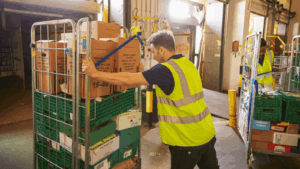
Roll containers have become an essential part of modern retail logistics, playing a crucial role in optimizing transport and distribution processes. Their robust design and ability to facilitate the efficient movement of goods make them particularly valuable for companies seeking to improve their operational efficiency. This study explores how the strategic integration of roll containers can significantly accelerate delivery times, while ensuring the smooth and secure management of product flows.
In a nutshell:
- 🚚 Supply chain optimization: container rolls improve supply chain efficiency by facilitating the transport and storage of goods, thus reducing handling times and costs.
- 🔒 Product safety and protection: they offer enhanced product protection thanks to their robust structure and locking systems, minimizing the risk of damage and loss.
- ⚡ Flexibility and operational efficiency: container rolls enable better organization of space and greater flexibility in logistics operations, easily adapting to variations in demand.
| 🔍 Criterion | 📊 Technical Details |
|---|---|
| 🔧 Materials | Galvanized steel |
| 📏 Dimensions | 800 x 600 x 1700 mm |
| ⚙️ Wheels | Swivel with brake |
| 🔒 Locking systems | Secured for goods protection |
What is a roll container container?
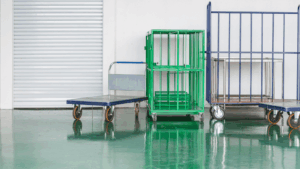
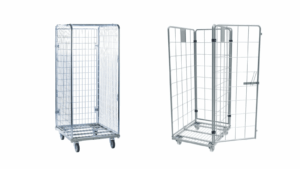
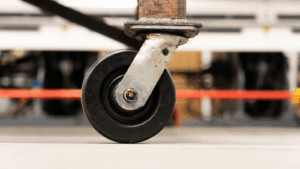
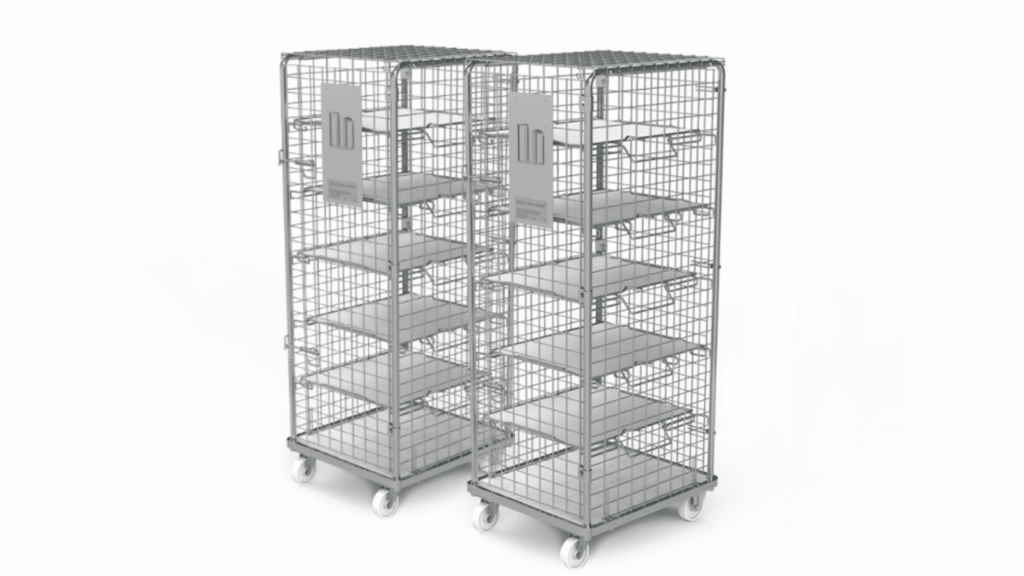
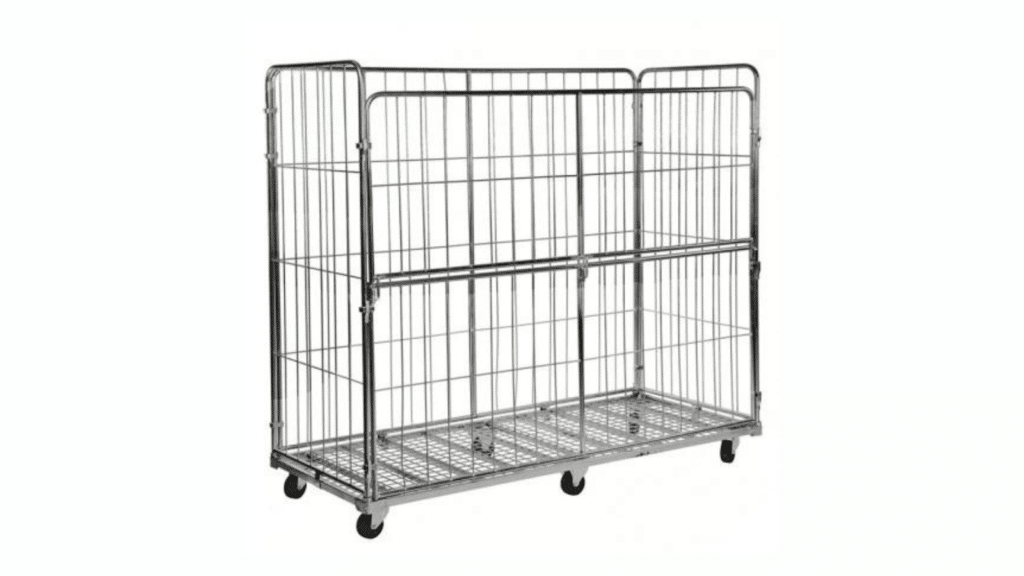
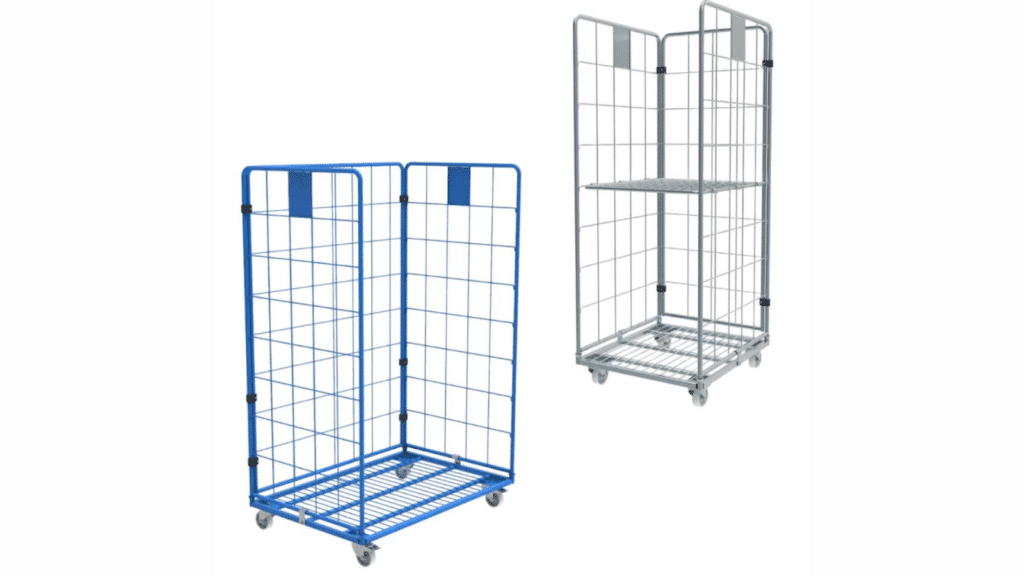
A roll container is a piece of handling equipment widely used in various industrial sectors, particularly in retail, for the efficient and secure transport of goods. Designed to facilitate internal logistics, it takes the form of a cart with a Platform topped by removable mesh walls. It is fitted with castors for easy movement over short distances. Roll cages are generally built with a sturdy metal frame, often galvanized to resist corrosion. This structure guarantees not only durability but also the safety of the goods being transported.
There are several types of roll containers to suit different needs:
- Standard models with grid walls for improved visibility and ventilation.
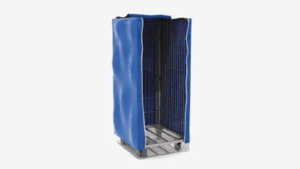
- Isothermal versions for transporting temperature-sensitive products.
- Foldable or nestable roll containers to optimize space during storage or return transport.
Advantages of container rolls in retail
Roll containers offer a range of significant advantages for companies in the retail sector:
- Supply chain optimization: By simplifying handling and storage processes, roll containers improve overall supply chain efficiency. They enable a smoother flow of goods from warehouses to points of sale, reducing waiting times and associated costs.
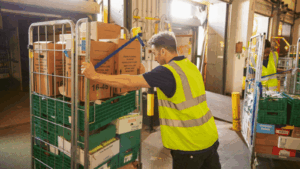
- Reduced handling time: Thanks to their ability to minimize intermediate handling, containerized roll cages speed up product loading and unloading. This translates into shorter delivery times, responding faster to consumer demand and improving customer satisfaction.
- Improved safety: Roll containers are designed to ensure the safety of products during transport. Their robust structure and secure locking systems reduce the risk of damage to goods, thus minimizing losses and costs associated with transport incidents.
Case study: Application of roll containers in a retail company
Let's take a look at the British supermarket chain Iceland, which has adopted these carts to optimize its logistics. Prior to the implementation of roll containers, the company faced major challenges related to inefficient stock management and extended delivery times. Manual loading and unloading processes hampered the fluidity of operations, adversely affecting customer satisfaction.
Rolling containers
The integration of the container rollers was carefully planned to meet the company's specific needs. A detailed analysis of goods flows and potential congestion points was carried out to identify areas for improvement. Logistics teams were trained in the safe and efficient use of the new equipment. Alongside this, adjustments were made to existing infrastructures to optimize storage space and facilitate forklift movement.
Results
After implementing container rolls, Iceland saw significant improvements in its logistics performance:
- Optimization of storage space: the use of roll containers has enabled better organization and more efficient use of space in warehouses and stores.
- Reduced product damage: Roll containers offer better protection for products during transport, reducing losses due to damage.
- Improved workplace safety: Roll containers facilitate handling operations, reducing the risk of injury to employees.
- Greater operational flexibility: Container rolls have made it easier for Iceland to adapt its logistics operations to variations in demand.
- Reduced unloading times: Unloading processes have been speeded up, enabling products to be put on store shelves more quickly.
- Enhanced sustainability: The use of roll containers has helped to reduce the company's environmental footprint by reducing the amount of packaging materials required.
Conclusion
The strategic integration of container rolls is a crucial step for companies in the retail sector seeking to improve their competitiveness and operational efficiency. Benefits such as reduced handling times, improved security and lower costs make them a profitable long-term investment. To maximize the benefits of roll containers, companies are advised to choose models adapted to their specific needs, and to train their staff appropriately in their use.
Whether you need a tailor-made order to meet specific requirements, or are looking for a roll container handling rental option to manage seasonal fluctuations in your business, Rolls Rapide is there to support you. Our customized solutions and quality customer service guarantee total satisfaction and optimization of your supply chain.
FAQ
1. What are the main advantages of roll containers in the retail sector?
Roll containers offer several key advantages for retail companies. They optimize logistics management by enabling goods to be transported efficiently and securely from warehouses to points of sale. Their robust design and ability to reduce handling times help to improve overall operational efficiency.
2. How do roll containers help reduce delivery times?
Roll containers minimize intermediate handling by enabling direct loading from warehouses to points of sale. This reduces order-picking times and speeds up the delivery process, responding faster to consumer demand.
3. What are the potential challenges when implementing roll containers?
Implementing roll containers requires careful planning and a thorough analysis of the company's specific needs. Challenges include the need to adjust existing infrastructures to accommodate the new equipment, as well as adequate staff training to ensure safe and efficient use. What's more, the integration of roll containers can require initial investments in terms of cost and time. However, these investments can be quickly offset by long-term savings and efficiency gains.