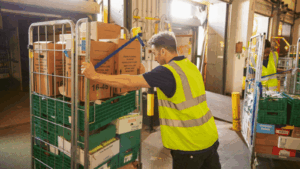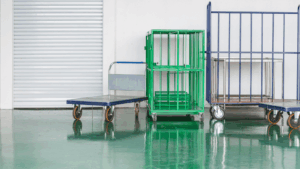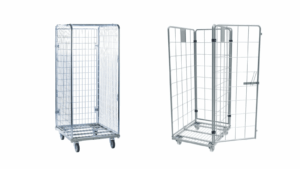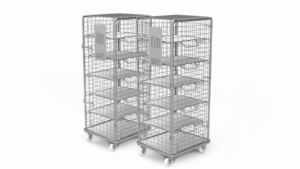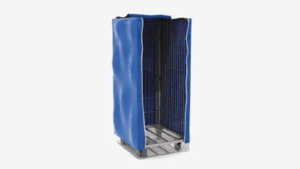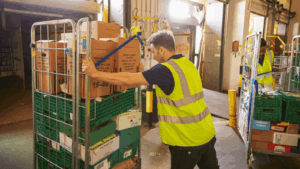
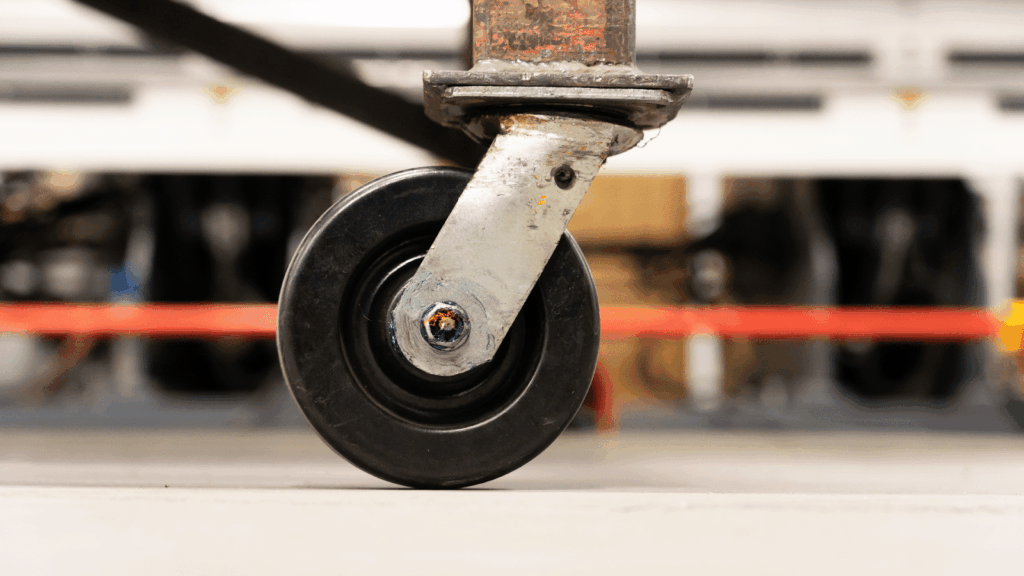
The choice of wheels and castors for your roll container is of crucial importance, as it directly influences the maneuverability, safety andefficiency of its use. It's imperative not to underestimate this strategic decision. This article explores the different options available on the market, providing a comprehensive guide to help you in the selection process. Our advice will take into account your specific needs, ensuring that your roll container is equipped with the optimum wheels and castors to ensure smooth, safe and efficient operation.
Load assessment and weight balance
The first crucial step in choosing wheels for your roll container is to accurately assess the maximum load your cart will have to support. This estimate is fundamental to guarantee safety during use, including both the weight of the load and that of the cart itself. Make sure that the weight is evenly distributed on all wheels, to avoid any imbalance or risk of tipping.
It's essential to bear in mind that not all wheels will necessarily be in permanent contact with the ground, especially on uneven surfaces. Elements such as thresholds, corners or unevenness can influence weight distribution and thus affect the stability of the trolley. material handling trolley. In off-road applications, it is essential to take account of rough or unstable surfaces, as well as any debris that may compromise the smooth running of the cart.
Materials adapted to the road surface
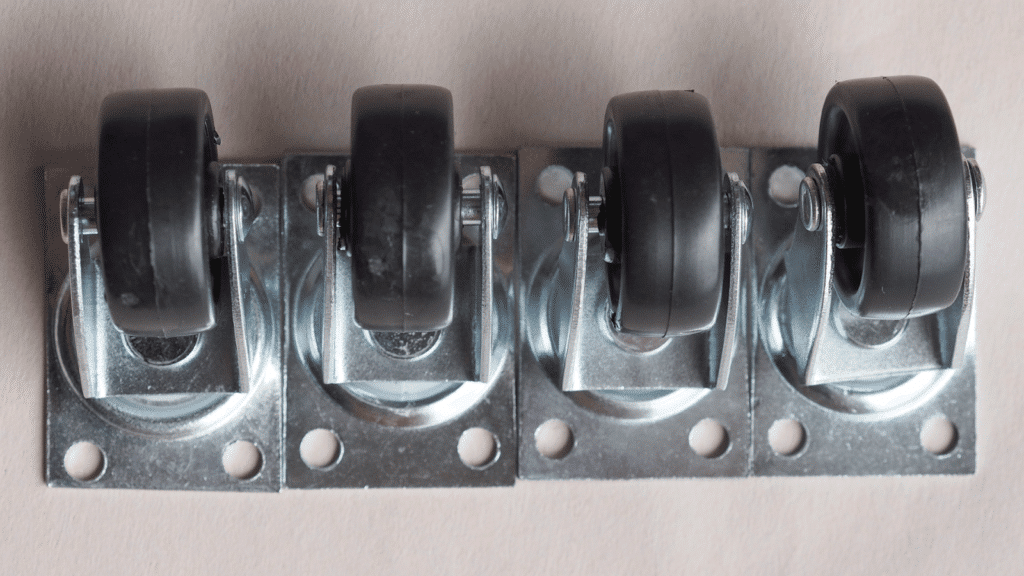
The choice of material for the wheel tread is a crucial step in the selection process. Each material offers specific advantages for different applications.
- Polyamide (PA) or polypropylene (PP) wheels: often less expensive, they offer high load capacity and are suitable for roll containers and warehouse carts. Polyamide has a wider temperature range than polypropylene, offering greater flexibility of use.
- Polyurethane (PU) wheels: An intermediate material between plastic and rubber, these wheels are ideal for a wide range of applications. They leave no marks, absorb vibrations well and are suitable for mixed indoor and outdoor use.
- Rubber wheels: Known for their flexibility, they are ideal for shock-sensitive areas such as gyms, hospitals or retail outlets. They offer excellent grip and a smooth ride on uneven surfaces.
Each material option has unique characteristics, offering remarkable adaptability to the specific needs of your application. It's crucial to choose wisely, taking into account the nature of your business and the conditions of use to which the wheels of your roll container will be subjected.
Impeller type and temperature resistance
The environmental conditions in which your wheels will be deployed play an essential role in the optimum choice of wheels for your roll container . If it's going to operate in extreme temperatures, it's imperative to ensure that the wheels you choose can withstand these variations. The temperature range of wheels available on the market generally extends from -40°C to 80°C. This means they can be adapted to a wide range of climatic conditions.
At the same time, resistance to humidity and chemicals is another crucial aspect, particularly relevant in industrial environments where these conditions are frequent. Ensuring wheel durability and performance in the face of these external agents is therefore essential to guarantee optimal operation. It also ensures a long service life for the roll container in demanding environments. By taking these environmental factors into account when selecting wheels, you can ensure proper adaptation to your specific needs and increased reliability in the conditions of use encountered.
Swivel or fixed castors?
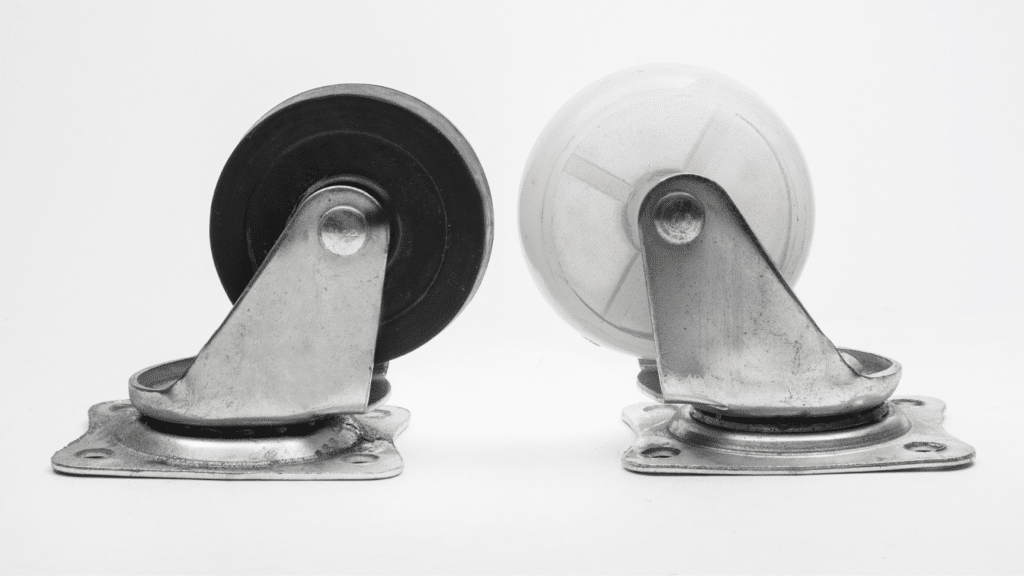
It's important to choose between swivel and fixed castors according to your specific needs. Depending on how your roll container will be used, whether for agile maneuvering in confined spaces, the choice between swivel and fixed castors will greatly determine the performance of your equipment. Similarly, if you're aiming for stable transport of heavy loads, this choice will significantly influence the safety of your roll container . It is therefore crucial to take these factors into account when selecting wheels, to ensure optimum use of your roll container in a variety of situations.
Fixed castors
Fixed castors offer enhanced stability when moving in a straight line, making them the perfect choice for heavy loads or uneven terrain. Their design guarantees a straight, predictable trajectory. This is essential for safety when transporting heavy loads. By maintaining a constant direction, they enable precise control of the truck, reducing the risk of accidents or overturning, especially in demanding environments.
Swivel castors
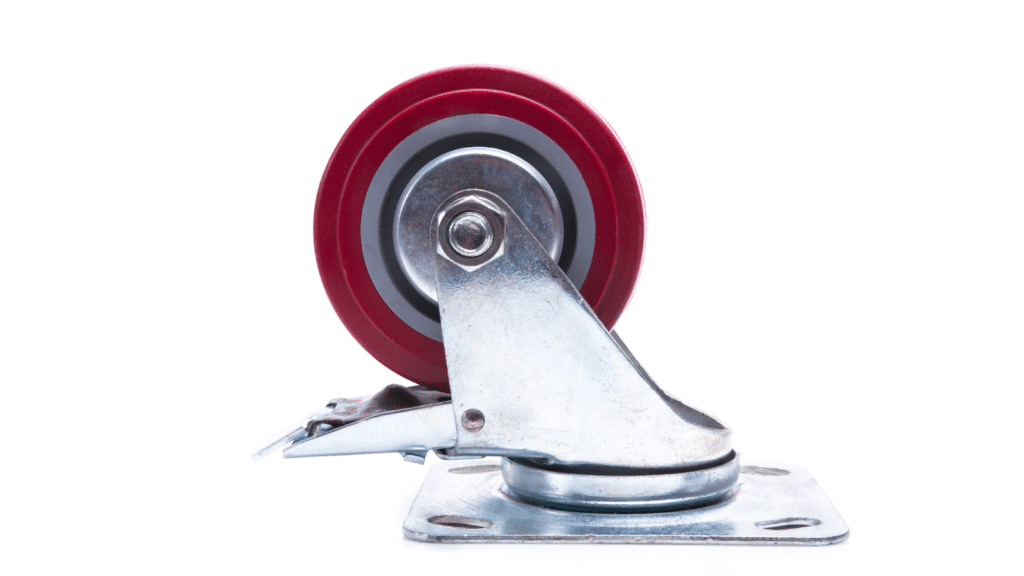
Swivel castors offer maximum maneuverability, ideal for applications where steering is crucial. They are particularly useful when maneuvering in confined spaces or when rapid changes of direction are required. Their ability to turn 360 degrees makes them particularly useful in tight spaces or when rapid changes of direction are required. They offer essential flexibility of movement in a variety of operating environments.
Bearing types and characteristics
The choice of bearings for your truck's wheels plays a crucial role in ease of movement, especially as loads become heavier. Bearings, the essential mechanical components of wheels, reduce friction between parts and thus promotesmooth movement. Unlike two smooth surfaces sliding over each other, bearings enable smooth movement while minimizing wear on parts over time.
Among the various types of bearings, some stand out for their specific characteristics and applications:
- Plain bearings: these generally consist of straight tubes around which the wheel axis rotates, and are particularly suitable for lighter loads or in environments where high temperatures or humidity are factors.
- Cylindrical roller bearings: designed to withstand heavy shocks, they reduce rolling resistance and are suitable for heavier applications requiring increased durability.
- Ball bearings: being the most common type, are used where friction and heat can become problems. They offer ease of movement and are preferred in situations where wheels are subjected to frequent, intensive use.
In an environment where durability and reduced rolling resistance are priorities, wheels with ball bearings are the best choice. Their superior longevity and ability to minimize friction ensure smooth, efficient operation, even under the most demanding conditions.
Conclusion
Choosing the right wheels and castors for your roll container is a crucial decision that impacts the safety, ease of use and durability of your equipment. Carefully consider the load, type of terrain, environmental conditions and level of maneuverability required. By making an informed choice, you'll optimize the performance of your roll container while ensuring the safety of your operations. Don't hesitate to consult Rolls Rapide for advice tailored to your specific needs.