

When it comes to logistics and materials handling, choosing the right order-picking truck is crucial. Whether it's for handling heavy loads requiring assistance, or lighter loads requiring the hands of operators, the right selection of this tool has a direct impact on the efficiency and safety of warehouse operations. This challenge extends to a wide range of industries where order picking plays a central role, from distribution and retail to manufacturing and industrial logistics.
Why is the choice of cart essential?
The right forkliftoptimizes operational efficiency by facilitating load handling, thus reducing waiting times and order processing times. What's more, a well-selected truck can improve overall warehouse productivity by enabling the simultaneous transport of several loads.
Choosing an order picking truck with the right safety features helps reduce the risk of accidents and injuries to operators. Safety features such as reliable brakes and appropriate load capacity are essential to ensure a safe working environment.
The well-being of operators is also influenced by the choice of trolley. material handling trolley. Ergonomic carts equipped with features such as adjustable handles help to reduce fatigue and muscular tension. They promote job satisfaction, contributing to a fulfilling working environment.
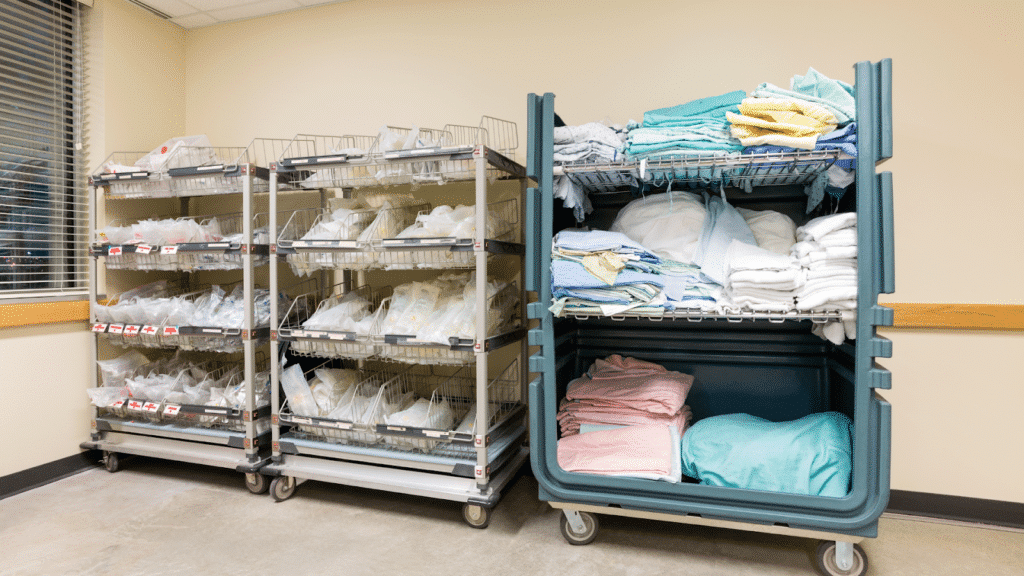
The different types of order-picking trucks
In the field of logistics and materials handling, order-picking trucks generally fall into three main categories:
- Manual forklifts: These require the physical effort of operators to move loads. Although they offer simplicity of use and lower initial cost, they can lead to increased fatigue and risk of injury for operators, particularly in busy warehouses.
- Semi-automatic forklifts: These forklifts combine electric assistance with human intervention to move loads. They reduce operator fatigue while offering greater efficiency than manual forklifts. Nevertheless, they require specific training and can be more expensive due to the additional technology involved.
- Automatic forklifts: They operate without human intervention to move loads. These trucks maximize efficiency by reducing the need for human labor. They can operate continuously and optimize order-picking processes. However, they require significant investment in terms of acquisition and maintenance costs, as well as a robust technological infrastructure.
Choosing the right cart for your business
The choice of material handling trolley varies according to the sector of activity, with specific requirements to meet the needs of each field:
E-commerce sector
In this fast-paced, flexible industry, trucks have to be adapted to handle large volumes of orders efficiently and to meet tight deadlines. Versatile, agile trucks are preferred for fast product handling.
Food sector
Compliance with hygiene and temperature standards is paramount in the food sector. Handling carts must therefore be designed with materials that are easy to clean and disinfect. Some can even be fitted with cooling or temperature-maintaining devices.
Pharmaceuticals sector
In this sector, where precision and traceability are essential, forklifts must be equipped with advanced tracking systems and technologies. These help guarantee the integrity of pharmaceutical products throughout the supply chain.
Manufacturing sector
Robustness and load capacity are crucial criteria in the manufacturing sector. Industrial trucks must be able to support heavy loads and withstand intensive use in sometimes harsh industrial environments.
Other sectors
In the logistics, retail and other industries, trucks need to be versatile and adapted to a wide variety of needs. Modularity, maneuverability and durability are important aspects to consider when choosing forklifts for these fields.
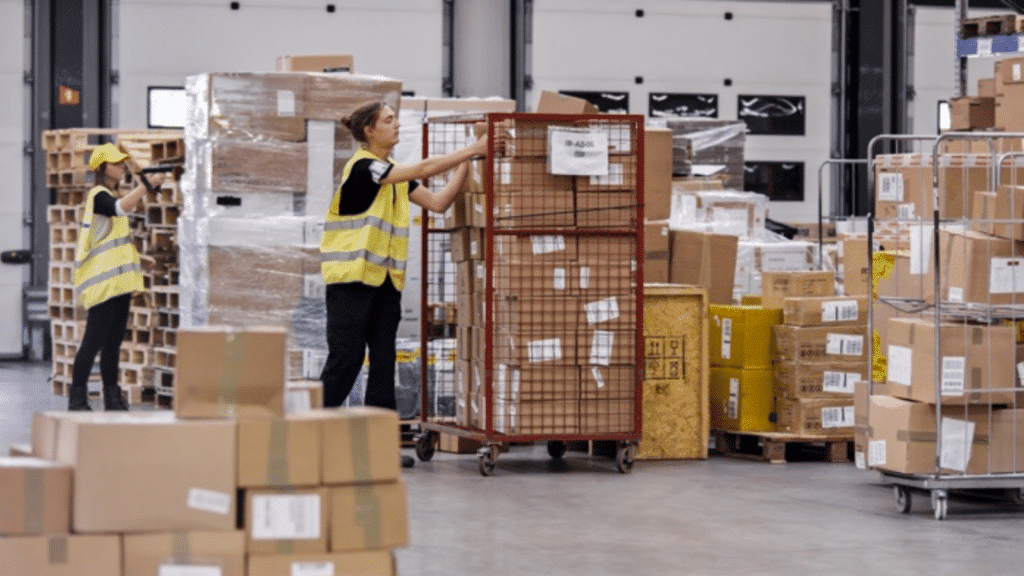
Order picking truck selection criteria
The efficiency of warehouse operations depends largely on the right choice of order-picking truck. Here are the essential criteria to consider:
- Order size and type: different order sizes require different trucks. Large orders call for robust trucks capable of handling heavy loads, while smaller orders require agile trucks for rapid handling.
- Warehouse layout and picking areas: The configuration of the warehouse, including the size of aisles and storage areas, determines the type of truck required. Compact trucks are best suited to small spaces, while larger trucks are ideal for larger warehouses.
- Budget and Total Cost of Ownership (TCO): In addition to the initial cost, it's crucial to take long-term maintenance and repair expenses into account when assessing the total cost of ownership. The available budget has a major influence on the final choice of truck.
Whether you work in retail, manufacturing or logistics, Rolls Rapide offers tailor-made solutions for your order picking truck needs. Contact us today to discuss your specific requirements and find out how we can help you optimize your operations.
Field experience and case studies
Various companies in different sectors have successfully operated order-picking trucks:
Amazon: The online retail giant deploys a variety of order-picking trucks in its warehouses to efficiently manage the flow of goods and fulfill customer orders. These warehouses are equipped with automated and semi-automated trucks to optimize logistics.
Toyota Motor Corporation: In its automotive manufacturing plants, Toyota uses automated trucks to move parts between the various workstations on the production line. This automation helps to improve the efficiency and safety of operations.
DHL: As a global leader in logistics, DHL operates a wide range of order-picking trucks in its warehouses and distribution centers around the world. Their fleet of trucks includes manual, semi-automatic and automatic equipment to meet specific customer needs and optimize logistics.
These examples show how companies from all walks of life are taking advantage of order-picking trucks to improve their logistics operations. They increase efficiency and guarantee customer satisfaction.
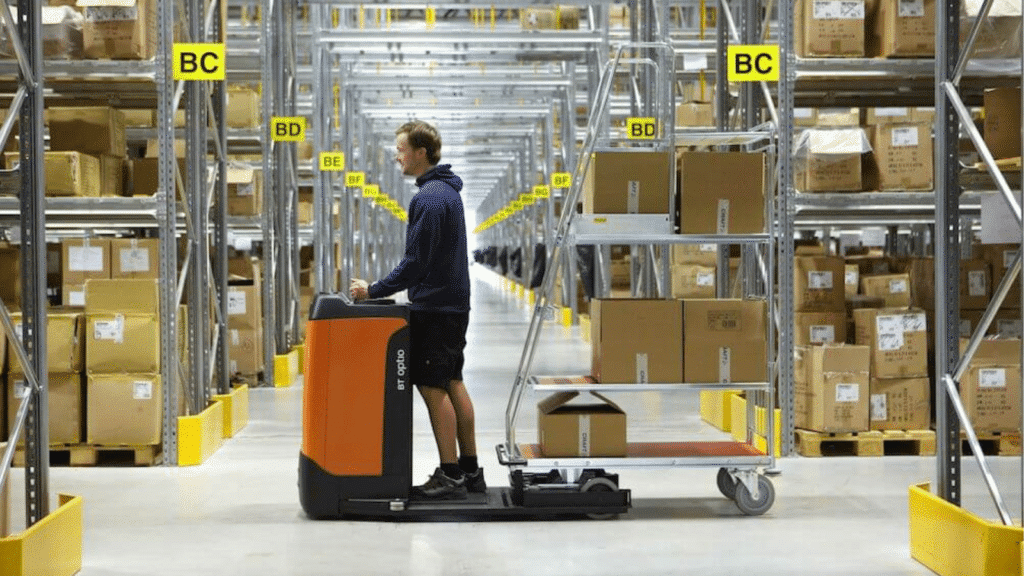
Trends and innovations in the field
Order-picking trucks are evolving rapidly, thanks to the integration of new technologies and constant innovation:
Internet of Things (IoT)
Trucks are increasingly equipped with IoT sensors to collect real-time data on their use, location and performance. This data is invaluable for optimizing order-picking processes, monitoring operational efficiency and anticipating breakdowns through predictive maintenance.
Automation
The automation of order-picking trucks is becoming increasingly popular as a means of increasing efficiency and reducing labor costs. Autonomous trucks and automated guidance systems enable goods to be moved autonomously around the warehouse. This reduces the need for human intervention and speeds up order-picking processes.
Ergonomic solutions
Manufacturers are increasingly focusing on developing ergonomic order picking trucks to improve operator comfort and safety. This includes features such as adjustable handles, assisted lifting systems and adjustable work platforms to reduce fatigue and the risk of injury associated with load handling.
Conclusion
Choosing the right order-picking truck is a crucial element in ensuring efficient and safe logistics operations. It is essential to consider various aspects, such as the volume and nature of orders, the configuration of the warehouse, as well as the budget and total cost of ownership. As each business sector has its own specific requirements, it is advisable to carefully evaluate these criteria in order to select the most suitable truck. By taking these factors into account, companies can optimize their order-picking operations, boost productivity and ensure customer satisfaction. Contact Rolls Rapide today to find out more about our range of order picking trucks tailored to your specific needs.