
At the heart of any modern business lies an essential element: logistics and supply chain management. Among the many aspects requiring careful attention in this field, the selection of the ideal Pallet for transporting goods is of crucial importance. By standardizing handling, storage and transport procedures, pallets play a fundamental role both at home and abroad. In this article, we'll explore in detail the various aspects of Palletization and how to choose the optimum Pallet for your business.
Palletization : Optimizing logistics flows
Palletization is the process of grouping several parcels on a common carrier. It offers a series of advantages that are essential for the fluidity of your supply chain. It provides maximum protection for your products, reduces transport costs, and optimizes the use of storage space. The result is greater profitability for your company. Let's explore these benefits in more detail:
- Protecting your goods: Palletization gives your packages added stability, protecting them from adverse weather conditions. This is particularly important for weather-sensitive products. The choice of stretch film to cover the Pallet depends on its configuration, enabling protection to be adapted accordingly.
- Optimizing vehicle and container capacity: Reducing the volume of goods to be shipped means lower transport costs. Pallets are designed to safely support loads of up to 2,500 kg, which is essential for maximizing the efficiency of your shipments.
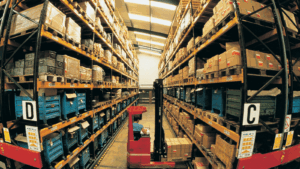
- Maximizing storage space: Whether you need permanent or temporary storage, pallets make efficient use of space, which is particularly beneficial in warehouses where space is often limited.
Palletization is a key element in optimizing logistics flows. It ensures better product protection, reduced transport costs, and optimal use of storage space.
Defining specific Palletization objectives
Before choosing the ideal Pallet for your business, it's essential to consider your specific Palletization objectives . It is imperative to consider the following elements:
- Do you transport goods that are particularly sensitive to bad weather?
- Is your Palletization space limited by specific dimensions?
- Will your operators have to handle particularly heavy pallets?
Answering these questions will help you choose the Pallet best suited to your mode of transport and the nature of your products. This eliminates potential shipping and export complications.
Variety of pallet types : Materials and characteristics
Pallet material is of crucial importance in the selection process. Pallets can be made of wood, plastic or cardboard. Each of these materials has its own advantages and disadvantages, which need to be taken into account according to your specific requirements.
Wooden pallets
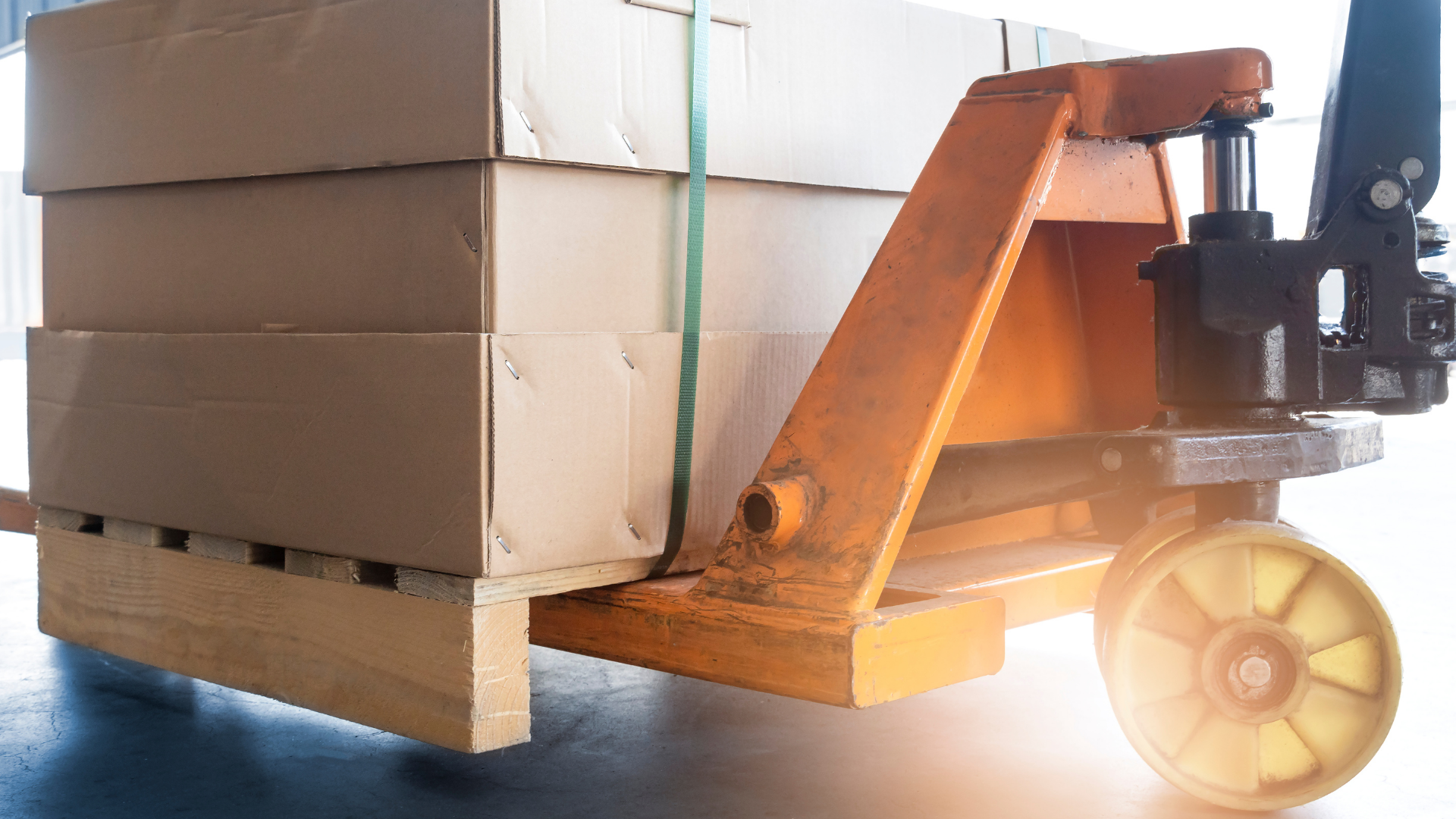
Wooden pallets are characterized by their sturdiness and ability to withstand static loads of up to 2,500 kg. There are two main types of wooden pallet:
- Pallet Europe: Suitable for companies in the pharmaceutical and food sectors, but involves additional costs due to consignment. In addition, treatment of packaging materials is mandatory.
- Pallet perdu: Less robust for heavy loads, it is economical and can be used without a deposit. Molded wood and composite pallets are an option for loads up to 1250 kg, and also offer insulating properties.
Plastic pallets
Plastic pallets are designed for safe handling. They are lightweight, easy to move, and require no treatment against pests.
Cardboard pallets
Generally recyclable, cardboard pallets can support loads of up to 500 kg. Their lightness and interlocking properties save on transport costs. They do not require pest treatment for export.
Pallet selection based on load and intended use
In addition to the material of manufacture, it is essential to select the Pallet according to the load and intended use. Pallets fall into three main categories:
- LightPallet : Ideal for occasional transport or light goods.
- Semi-heavyPallet : Designed for repeated use during multiple transports.
- HeavyPallet : Adapted to frequent rotation requirements.
It is imperative to take into consideration the intended use of the Pallet, be it :
- A static load: For storage without movement ;
- A dynamic load: For use with a Pallet truck, paying particular attention to the maximum load capacity ;
- A Storage rack load: for overhead storage on shelves.
Pallets are available in a range of standard formats to meet a variety of logistical needs. They can also be custom-made for specific items. To guarantee optimum stability, it is imperative that goods do not overhang the edges of the Pallet , nor are they located too far away from them.