
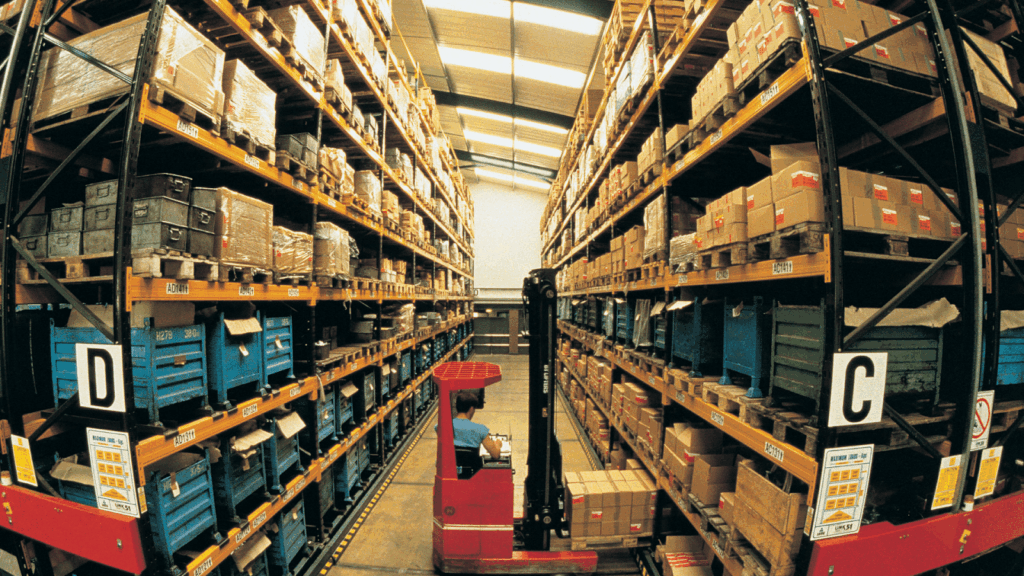
The warehouse occupies a central position in a company's logistics chain. It serves as a hub for the receipt, storage and dispatch of goods. But beyond these basic functions, its layout has a direct impact on the overall efficiency of the entire supply chain. Making your warehouse more efficient and user-friendly is no easy task, but with the right advice, you can reduce costs and optimize your operations. Here are our 5 tips to help you maximize your warehouse layout.
1- Analyze needs at all levels of the organization
Before undertaking any changes to your warehouse configuration, it's vital to understand the requirements of the whole business. Involving operational staff in the decision-making process is a crucial step in avoiding unnecessary disruption and increasing job satisfaction. There are several key questions to ask:
- What are the current problems and fundamental needs that the new warehouse layout should address?
- How can we improve safety, whether by installing protective devices or investing in specific equipment?
- What areas can be automated to relieve staff and boost efficiency?
By integrating the perspectives of operational staff, you'll be better equipped to design a warehouse that truly meets the needs of the entire organization. This proactive approach fosters a better understanding of challenges and opportunities. As a result, more relevant and effective solutions can be put in place. This collaboration strengthens cohesion and efficiency within the company, which is beneficial for everyone involved.

2- Selecting the right storage systems
The choice of storage system is of vital importance to the overall efficiency of your warehouse. Opting for automation offers significant advantages for increasing operational efficiency and making full use of available space. Rolls Rapide can help you decide whether an automated or manual system is best suited to your specific needs. Contact us for personalized advice!
While manual management may be appropriate in certain circumstances, automation offers considerable advantages, including reduced travel and improved safety. A well-organized warehouse not only maximizes productivity, but also ensures the safety of employees and goods.
It's crucial to take several factors into account when choosing a storage system, such as the nature of the products, the frequency of movements and the availability of space. We'll be happy to advise you on this critical decision. This helps you to implement a storage solution that effectively meets your operational needs, while maximizing your warehouse's performance.
3- Integrate warehouse management software (WMS)
Modernizing your warehouse with warehouse management software is an effective way of optimizing its layout. By strategically distributing products according to pre-established rules, whether usingautomated handling equipmentor manual equipment such as order-picking carts, movements can be minimized. A warehouse management system (WMS) also offers rigorous inventory monitoring, ensuring product availability while maintaining minimum stock levels.
Investing in a WMSimproves inventoryaccuracy , reduces the costs associated with excess stock, and ensures constant availability of items. This transition to digital warehousing offers a multitude of benefits, including :
- Better use of space;
- More efficient workflow management ;
- Reduced human error.
It also enables faster adaptation to fluctuations in demand, and an overall improvement in operational efficiency.

4- Adopt shelving adapted to each product
The choice of storage equipment plays a fundamental role in efficient warehouse planning. Various categories of storage devices are suitable for specific types of goods, such as :
- Pallet racks ;
- Lightweight shelving ;
- Store gondolas;
- Cantilevers.
It is imperative to take into account the specific characteristics of each type of equipment to ensure shelving stability and ease of handling. Product layout must be meticulous to optimize the use of available space. Criteria such as frequency of use, weight and dimensions must be taken into account. The judicious integration of this storage equipment contributes not only to the operational efficiency of the warehouse, but also to the preservation of worker safety and ergonomic shelving. A well-thought-out approach to the selection and organization of storage equipment ensures smooth internal logistics and maximum utilization of the warehouse's storage capacity.
5- Maintaining a sustainable, evolving objective
The final design of a warehouse must be robust and durable to stand the test of time. By anticipating future changes in your requirements, you can avoid designing a warehouse that will be obsolete in just a few years. To ensure a design that endures, it's crucial to follow these rules of thumb:
- Organize frequently collected goods in easily accessible areas to optimize operational efficiency.
- Group products for cross-selling so that they can be picked all at once, improving the productivity of the order-picking process.
- Place heavy products safely and within easy reach to avoid injury and facilitate handling.
- Combine high-performance software with logical aisle numbering to reduce the time needed to search for items, increasing overall efficiency.
- Establish logical walking routes for employees and machines, minimizing unnecessary travel and downtime.
- Consider implementing one-way lanes to prevent dangerous situations and keep traffic flowing smoothly.
- Allow sufficient space in order picking areas to avoid bottlenecks and maintain an efficient workflow.
By following these guidelines, you can ensure a durable and efficient warehouse design, ready to meet your company's current and future needs.
Warehouse layout optimization: Key benefits
Optimizing your warehouse layout promises to bring significant benefits to your business. By making the most of available space, we can maximize utilization, reduce travel and segment areas for efficient task organization. This approach will help save time and costs. By optimizing routes and arranging materials intelligently, we can make our facilities more profitable.
Optimized workflows will enable us to achieve better stock rotation, which in turn will help us to manage our inventory more dynamically. By tactically planning our warehouse, we'll be able to choose the most appropriate management methods, tailored to our specific needs, which will improve our operational efficiency. Optimal warehouse configuration will enhance safety by enabling us to apply appropriate security measures.