
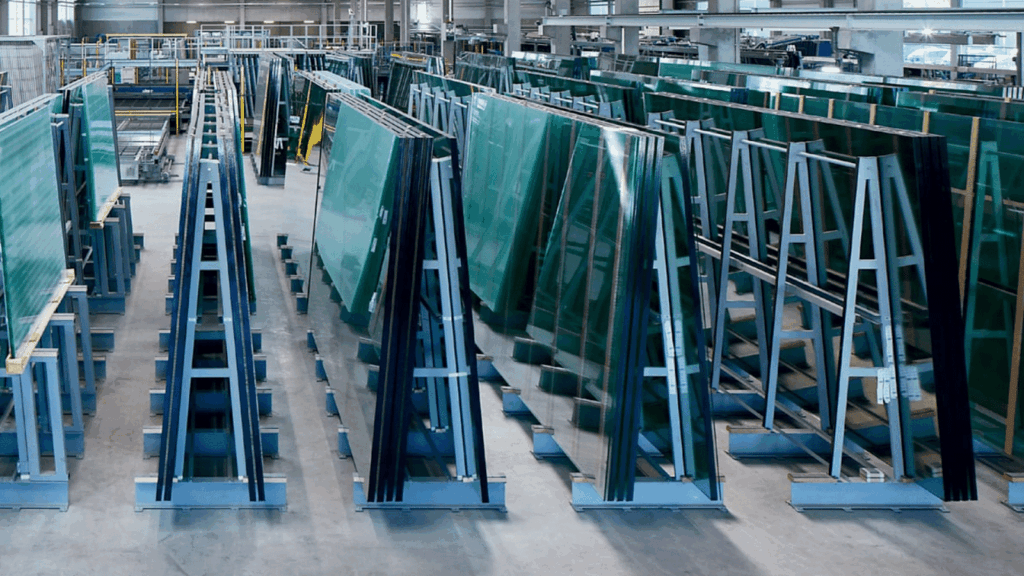
Safe handling and transportation of glazing is essential in various sectors such as the glass industry, construction and logistics. Glazing, whether used in construction, joinery or other applications, requires adequate protection to avoid potential damage and ensure worker safety. This is where handling trestles come in, as they are specially designed for lifting, storing and transporting sheets of glass. In this article, we take a closer look at the importance of handling racks in protecting glazing, and how this specialized equipment helps to optimize efficiency and safety in working environments.
Why protect glazing?
Transporting and storing glazing without adequate protection exposes these fragile materials to a variety of risks, which can result in costly damage to customer satisfaction. Here are some of the common risks associated with transporting and storing glazing without proper protection:
- Risk of breakage and physical damage: Glazing is sensitive to shock, vibration and excessive pressure. Without adequate protection, sheets of glass are susceptible to breakage or physical damage, compromising their structural and aesthetic integrity.
- Scratches and scuffs: Glass surfaces are easily damaged by rubbing or contact with hard materials. Scratches and scuffs reduce the aesthetic quality of glazing, affecting its visual appeal and value.
- Warping and twisting: Incorrectly handled or stored glazing can warp, compromising its fit and subsequent installation.
Damaged glazing entails direct replacement costs, and can also have a negative impact on customer satisfaction. They can also lead to delays in construction projects, complaints from unhappy customers, lost productivity and a compromised reputation for companies.
What is a handling easel?
A handling rack is a support specially designed for handling, lifting, storing and transporting sheets of glass and other similar materials such as wood, metal or plastic panels. This equipment offers a secure solution for holding glazing in a vertical or inclined position, reducing the risk of damage during handling operations.
Handling trestles for glazing are available in a variety of types and models to meet the specific needs of companies in the sector. Here are some of the most common types:
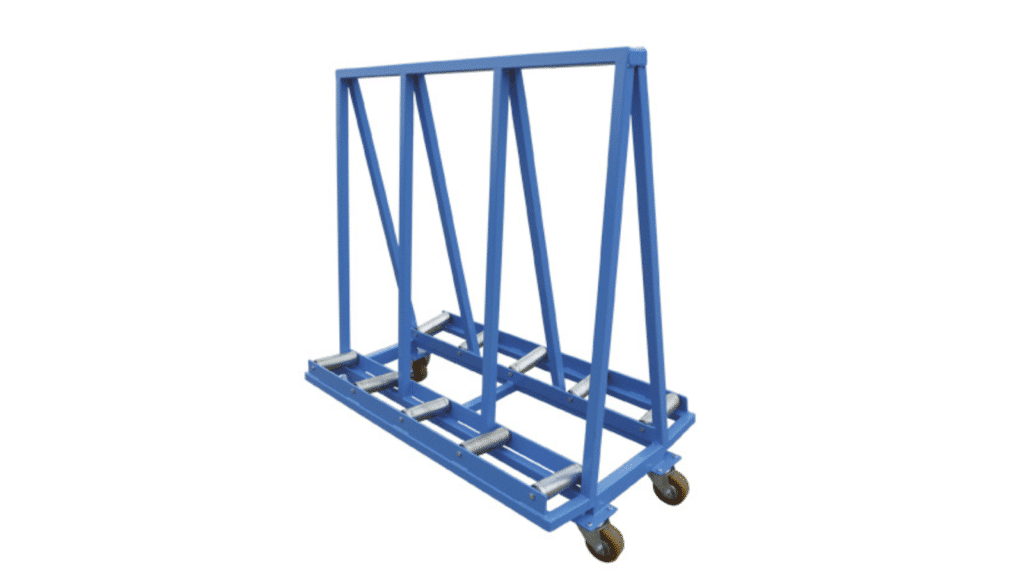
- Simple trestle: This type of trestle allows glazing to be installed on one side only. It is generally used when glazing needs to be handled and transported on one side only.
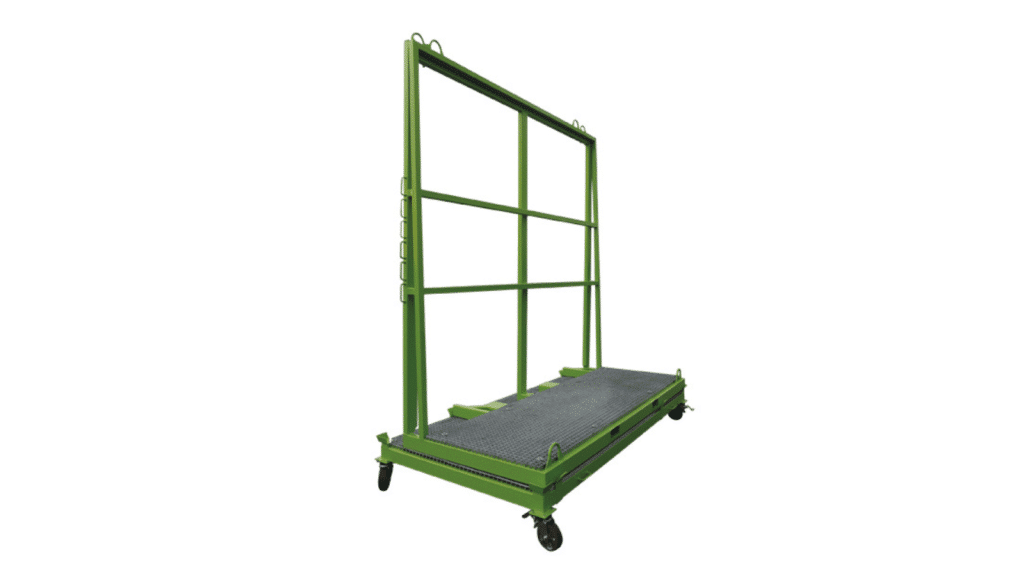
- Double trestle: Also known as a "double-entry" or "double-sided" trestle, this model allows glazing to be installed from both sides. It offers greater versatility when handling glazing, and can be used to transport sheets of glass more efficiently.
There are a variety of materials used in manufacture, including steel, aluminum and wood, each offering its own characteristics. Available in a variety of dimensions, this object can be adapted to different needs and preferences, offering a versatile solution for a variety of applications. In addition to the standard models available on the market, it is also possible to manufacture bespoke trestles to meet specific company requirements in terms of dimensions, load capacity and other features.
The advantages of handling trestles for glazing
Handling trestles play a crucial role in the glass industry, providing essential protection for fragile glazing. Their special design and the use of absorbent coatings such as rubber ensure effective protection against impact and scratches. This considerably reduces the risk of damage that could compromise the structural and aesthetic integrity of the glazing.
This equipment facilitates the safe transport and storage of glazing, thanks to its ergonomic design, which enables precise loading and unloading, thus minimizing the risk of injury to workers. What's more, by allowing glazing to be stacked vertically, they optimize the use of storage space, which can result in savings on the cost of acquiring or renting additional premises.
The trestles also help to improve operational efficiency by reducing waiting times and delays in construction or renovation projects. By facilitating workflow and ensuring safe, efficient glazing processing, they promote smooth, cost-effective operations.
Criteria for selecting a glass handling rack
When it comes to choosing a glass handling rack, several criteria need to be taken into account to ensure optimum protection and efficient handling. Here are the main elements to consider:
Size and weight of glazing to be transported or stored
The trestles must be sized to safely accommodate the glazing. It is essential to choose a model capable of supporting the weight of the glazing without compromising its structural integrity. The load-bearing capacity of the trestle must be compatible with the dimensions and weight of the glazing units commonly handled in your company.
Bridge materials and design
Trestle materials must be robust and durable to withstand the stresses of glass handling. Steel, aluminum or wooden trestles are commonly used, each offering specific advantages in terms of strength and durability. In addition, the addition of a protective coating such as rubber can reduce the risk of scratches or damage to glazing.
Flexibility and modularity for different types of glazing
Glazing can vary in size, shape and type, requiring flexible, modular handling trestles. Make sure the easel you select can accommodate different types of glazing, including single and double glazing, as well as laminated and tempered glass. The easel's ability to be adjusted or configured to your company's specific needs is a crucial aspect to consider.
Instructions for use and safety
For safe and efficient use of glazing handling trestles, it's important to follow good practice and appropriate safety measures. Here are some essential tips:
- Make sure the glazing is correctly positioned on the trestle to prevent it from sliding or tipping over during transport.
- Use safety straps to secure the glass firmly to the trestle and prevent unwanted movement during handling.
- To maintain stability and prevent accidents, avoid overloading the bridge beyond its maximum capacity.
- Use rubber shims or other suitable materials to protect the glazing from impact and friction during transport.
When it comes to maintenance and inspection of trestles, we recommend regular checks for any signs of damage or failure. This includes inspection of welds, loose parts and any cracks. Any problems detected should be rectified promptly to avoid any risk of injury or damage to the glazing. It's also important to regularly clean the trestles to remove any build-up of dirt, dust or debris that could compromise their operation. Regular maintenance helps to ensure the reliability and durability of handling equipment.
Testimonials and case studies
Philippe Robert, Logistics Manager at VFT, a glazing specialist based in Orléans, comments: "Since we started using the handling trestles in our company, we have seen a significant improvement in the protection of our glazing during transport. The trestles have enabled us to significantly reduce the risk of damage during handling and storage, which has had a positive impact on our customers' satisfaction. Thanks to this equipment, we have been able to maintain our reputation as a trusted supplier of high-quality glazing in France and Europe."
Suzanne Caen, Production Manager at AMI FENÊTRES, specializing in the renovation of aluminum, PVC and wood joinery for modern interiors, shares her experience: "The introduction of handling trestles into our production process has been a real revelation for us. Not only have we managed to reduce damage to glazing during handling, but we've also improved our overall operational efficiency. The trestles have enabled us to handle glazing with greater precision and safety, which has not only increased our customers' satisfaction, but also enhanced our reputation as a specialist in the renovation of joinery for modern interiors."
Conclusion
Handling trestles are essential to ensure optimum protection of glazing during transport and handling. Compliance with good practices and appropriate safety measures is crucial to prevent accidents and damage to fragile materials. It is therefore advisable to carefully assess the company's specific needs in order to select the most suitable trestle. By investing in the right equipment and following safety recommendations, companies can guarantee safe, efficient handling of glazing, while preserving its integrity.