

In the field of logistics, where speed and efficiency are fundamental imperatives for any company, innovation is a constant necessity. It responds to growing customer demand while rationalizing costs. An ingenious method is emerging in this context: freight consolidation. This strategy aims to optimize product transport and warehousing by grouping shipments from multiple customers into a single vehicle or container. This reduces costs while improving the efficiency of logistics operations. Let's explore this practice in detail, exploring its benefits for both companies and carriers, as well as the process involved in its implementation.
In a nutshell:
- 📦 Advantages of Merchandise Grouping: This consolidation method improves the efficiency of logistics operations by grouping shipments from several customers, reducing shipping costs and optimizing the use of storage space.
- 🔄 Implementation process: Bundling involves several key stages in a warehouse, including receiving, addressing, and shipment preparation, where goods are organized and ready for consolidated shipment.
- 🚚 Impact on Transport and Safety: Groupage enables better management of transport in batches, adapting loads for smaller companies, while putting in place strict safety measures to guarantee the protection of goods throughout their journey.
| 📌 Step | 🛠️ Action | 🔍 Objective |
|---|---|---|
| Reception | Sorting and dividing stock | Prepare goods for consolidation |
| Addressing | Assignment to specific locations | Optimize storage space |
| Pre-shipment | Grouping by route or order | Facilitate efficient grouped shipments |
Understanding freight consolidation
Groupage, also known as consolidation, is the process of combining products from different shippers into a single container or truck. This ingenious approach harmonizes transport flows and warehousing management, offering an effective solution for optimizing logistics operations. But how does this process work in practice?
In a warehouse, goods of the same kind but from different sources are grouped together in three key stages:
- At goods receipt: incoming stock is sorted and divided, ready to be grouped according to its final destination.
- Addressing: goods are assigned to specific storage locations, optimizing available warehouse space.
- At pre-shipment: inventory from various sources is grouped according to delivery route or customer orders, ready for shipment in a single consolidated consignment.
The use of tools such as industrial trucks is recommended to guarantee the optimization of logistics operations by ensuring the safe and efficient handling of goods. Their versatility is not limited to simple transport, but also enables them to move a wide variety of objects and loads efficiently.
Strategic advantages of groupage logistics
The adoption of freight consolidation offers companies several strategic advantages:
Lower operating costs
This practice allows you to share shipping and storage costs, making transportation more accessible for small businesses that can't fill a truck or container to capacity. You pay only for the space occupied by your products, reducing unnecessary expenses.
Improving service quality
By grouping shipments for several customers, companies benefit from greater flexibility in terms of shipment frequency and choice of routes. This collaborative approach optimizes logistics operations, offering your customers a better quality of service.
Optimizing storage space
Goods consolidation maximizes the use of storage space by filling every nook and cranny of trucks, containers and warehouses. Waste is reduced, and logistics platforms are fully exploited, contributing to more efficient resource management.
Freight consolidation in the transport sector
In the transport sector, groupage freight allows carriers to offer two types of services:
- Truckload: A single customer's load occupies an entire truck or container.
- Less-than-truckload: Loads from several customers are grouped together in a single truck or container.
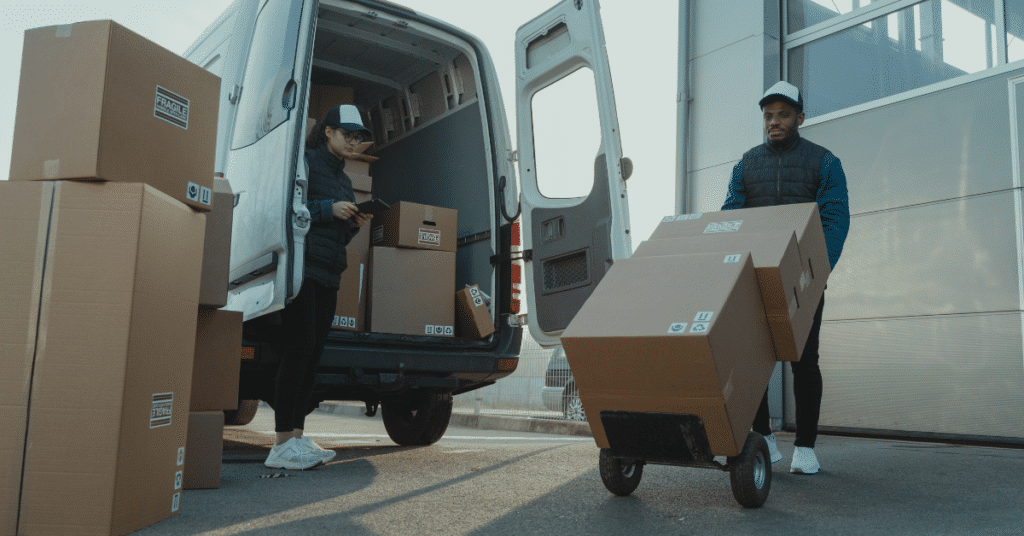
This approach makes long-haul shipments more accessible to smaller companies, which generally don't have a high enough volume of products to fill an entire truck or container. By consolidating loads, carriers can handle goods from several customers at once. This enables smaller companies to benefit from more affordable transport costs. With logistics groupage, you only pay for the space occupied by your products in the transport unit. This makes the final service not only more affordable, but also faster and more efficient.
Warehouse goods grouping process
Consolidation of goods is a practice that goes beyond simple transportation. It is also used in warehouses to consolidate stocks from different customers. This technique optimizes storage, speeds up flows and enhances end-customer satisfaction.
In warehouses dedicated to inventory consolidation, several steps are followed:
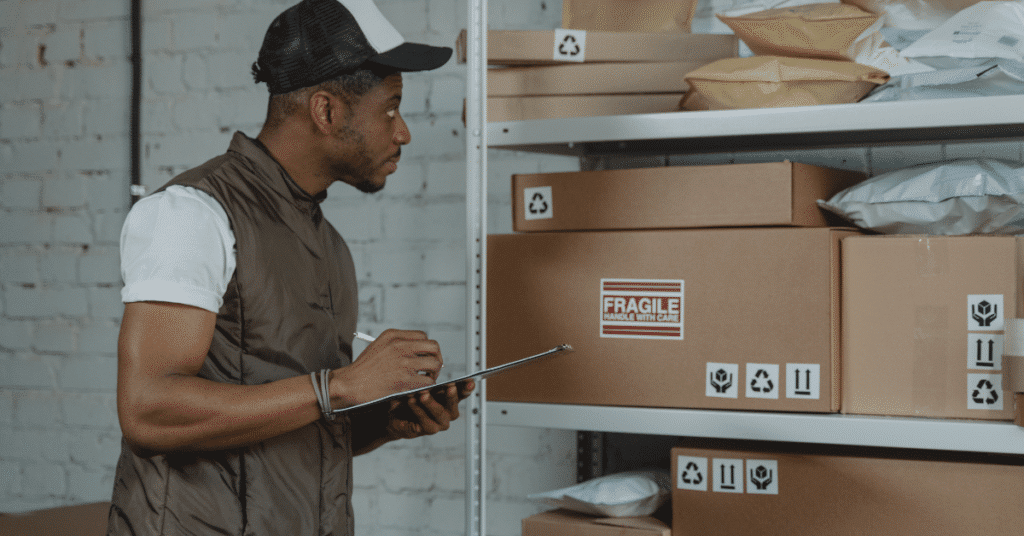
- Receiving incoming batches: Stocks are sorted and loaded with goods of the same type.
- Addressing: Goods are placed in storage racks to optimize the space available in the warehouse.
- Shipment preparation: Stocks are assembled for later grouped shipment, based on their route or on the customer having ordered a single transport unit.
Types of grouped goods in logistics
Goods grouping in logistics concerns a variety of products, offering essential flexibility to optimize transport and storage operations. Food products such as fruit, vegetables and dairy products are frequently grouped together, due to their similar storage and handling requirements. This consolidation guarantees product freshness while minimizing the risk of spoilage during transport.
Common consumer goods, such as electronics, clothing and household goods, are also often grouped together. By combining these items according to size, weight or fragility, companies can maximize storage space utilization and streamline logistics processes. This versatile approach enables companies in all sectors to benefit from the advantages of grouped goods, including greater efficiency, lower costs and improved inventory management.
Safety measures for the groupage of goods
The safety of goods is an absolute priority in any logistics process, including groupage. Several measures are put in place to ensure the protection and integrity of parcels throughout their journey:
- Precise labeling and identification: Each product is carefully labeled and identified, making it easy to track its progress through the supply chain.
- Appropriate packaging: Items are packaged appropriately, whether on pallets or in special crates or containers, guaranteeing their safety during transport.
- Safety checks: Regular checks are carried out to ensure that goods comply with current safety standards, thus reducing the risks associated with transporting unauthorized products.
- Tracking and tracing: Meticulous tracking is ensured throughout the supply chain, enabling rapid reaction to any problems and minimizing the risk of theft or loss.
- Training and awareness: Operators involved in the groupage of goods are trained in the safety procedures to be followed, ensuring correct handling of products and effective reaction in the event of an incident.
Conclusion
Freight consolidation in logistics is much more than a simple method of managing shipments. It's an intelligent strategy for optimizing every stage of the logistics process, from receipt to delivery. By adopting this innovative approach, companies can not only reduce their operating costs, but also improve the quality of their services and optimize the use of their resources. In a market where operational efficiency is the key to success, consolidation is a major asset for companies wishing to remain competitive and efficient.