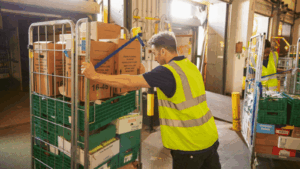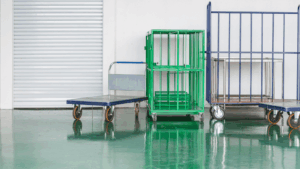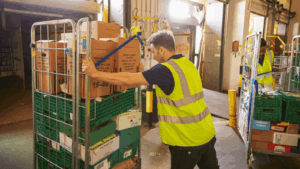
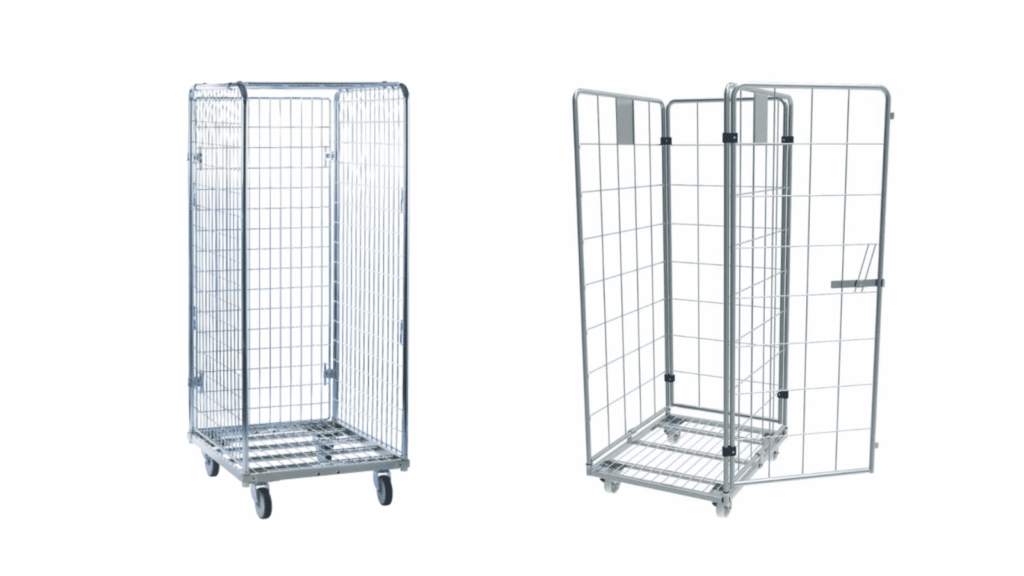
Les roll conteneurs sont des équipements indispensables dans de nombreuses industries, facilitant le transport et le stockage des marchandises. Leur importance est indéniable, car ils améliorent l’efficacité des opérations logistiques. Ils réduisent également le risque de blessures pour les travailleurs et protègent les produits durant leur manipulation. Que vous travailliez dans la distribution, la logistique, l’hôtellerie ou la santé, ce guide détaillé vous aidera à sélectionner le roll conteneur le plus adapté à vos besoins spécifiques en couvrant les critères essentiels à considérer.
En résumé :
- 🛠️ Capacité de charge adaptée : Choisir un roll conteneur avec la capacité de charge appropriée (400 à 800 kg) en fonction des types de matériaux transportés pour garantir la sécurité et l’efficacité.
- 🏋️ Matériaux durables : Opter pour des matériaux robustes comme l’acier, le plastique ou l’aluminium selon les besoins spécifiques en termes de durabilité et de maniabilité.
- 🧩 Modularité et sécurité : Privilégier des modèles modulaires avec des étagères amovibles et des systèmes de verrouillage pour une flexibilité d’utilisation et une protection optimale des marchandises.
| 🔍 Critère | 📊 Détails Techniques |
|---|---|
| 🚛 Capacité de charge | 400 – 800 kg |
| 🏋️ Matériaux | Acier, plastique, aluminium |
| 🔄 Modularité | Étagères amovibles |
| 🔒 Sécurité | Systèmes de verrouillage intégrés |
Capacité de charge
La capacité de charge est un critère primordial pour le choix d’un roll conteneur. Elle détermine le poids maximal que le conteneur peut supporter sans compromettre sa structure ou sa maniabilité. Il est essentiel de connaître les types de matériaux que vous allez transporter afin de faire un choix judicieux. Les rolls de manutention sont utilisés dans diverses industries pour transporter :
- Des produits alimentaires ;
- Des vêtements ;
- Des équipements électroniques ;
- Des pièces industrielles, etc.
Les capacités de charge des roll conteneurs varient généralement entre 400 kg et 800 kg. Pour les produits légers comme les textiles et les produits de consommation courante, un conteneur avec une capacité de 400 kg peut suffire. Pour des articles de poids moyen, comme des cartons de produits divers ou des équipements légers, une capacité de 600 kg est souvent idéale. Enfin, pour des charges lourdes telles que des pièces industrielles ou des équipements volumineux, il est préférable de choisir un roll conteneur capable de supporter jusqu’à 800 kg.
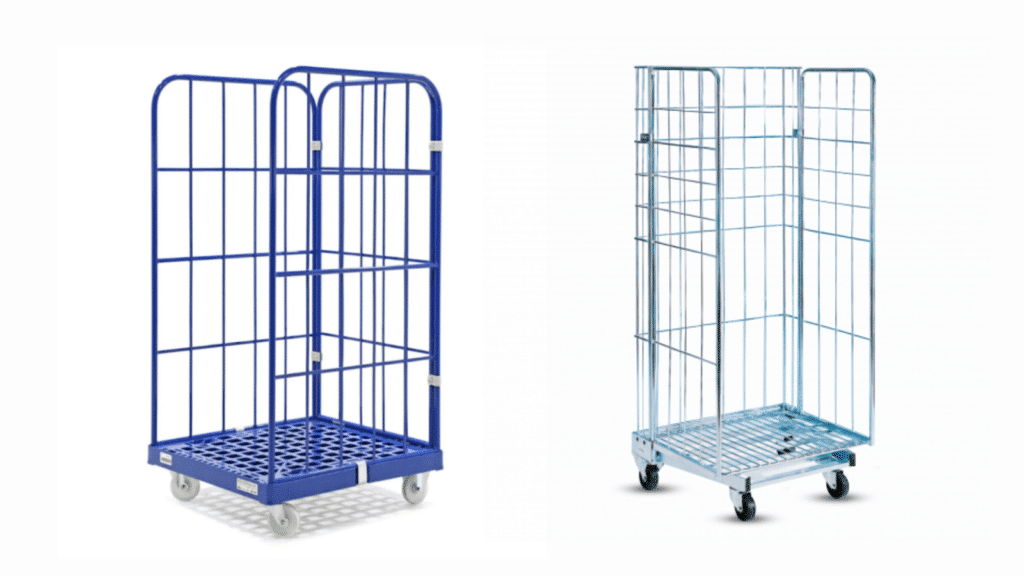
Matériaux et durabilité
Les matériaux de fabrication des roll conteneurs influencent grandement leur durabilité et leur longévité. Le choix du bon matériau peut non seulement prolonger la vie utile de votre équipement mais aussi améliorer sa performance.
Acier
L’acier est un choix populaire pour les roll conteneurs en raison de sa robustesse et de sa durabilité exceptionnelle. Il peut supporter des charges très lourdes, ce qui le rend idéal pour les environnements industriels exigeants. Cependant, il est également plus lourd que d’autres matériaux, ce qui peut compliquer la maniabilité. Un inconvénient majeur de l’acier est sa susceptibilité à la corrosion, mais cela peut être atténué par des traitements antirouille. Par exemple, dans l’industrie manufacturière, les roll conteneurs en acier sont souvent utilisés pour le transport de pièces mécaniques lourdes et d’équipements.
Plastique
Les roll conteneurs en plastique sont légers et faciles à manœuvrer, ce qui les rend parfaits pour les environnements où la flexibilité et la rapidité sont essentielles. Ils résistent bien à la corrosion, ce qui les rend idéaux pour les secteurs nécessitant une hygiène stricte, comme l’industrie alimentaire et pharmaceutique. Cependant, ils sont généralement moins durables sous des charges très lourdes par rapport à l’acier.
Aluminium
L’aluminium offre un excellent compromis entre poids et durabilité. Il est plus léger que l’acier tout en étant suffisamment robuste pour la plupart des applications industrielles. De plus, il est résistant à la corrosion, ce qui prolonge sa durée de vie même dans des environnements humides ou corrosifs. Le principal inconvénient de l’aluminium est son coût plus élevé comparé à l’acier et au plastique.
Maniabilité et ergonomie
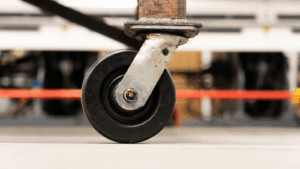
Un conteneur facile à manipuler réduit la fatigue des travailleurs et augmente la productivité. Les types de roues et la conception des poignées jouent un rôle clé dans la maniabilité des roll conteneurs. Les roues pivotantes offrent une grande maniabilité, ce qui est idéal pour les espaces restreints et les virages serrés. Elles permettent de déplacer facilement le conteneur dans toutes les directions, réduisant ainsi l’effort nécessaire pour le manipuler. En revanche, les roues fixes fournissent une direction stable. Cela est souvent nécessaire pour maintenir le contrôle sous charge. Utilisées en combinaison avec des roues pivotantes, elles offrent un équilibre parfait entre maniabilité et stabilité.
Les poignées ergonomiques sont également essentielles pour faciliter la manipulation des conteneurs. Conçues pour réduire la pression sur les mains et les bras, elles permettent de déplacer le roll conteneur avec moins d’effort et de fatigue. En outre, les systèmes de freinage intégrés jouent un rôle important dans la sécurité. Ils assurent la stabilité du roll conteneur lorsqu’il est à l’arrêt, empêchant les déplacements involontaires et améliorant la sécurité des opérations.
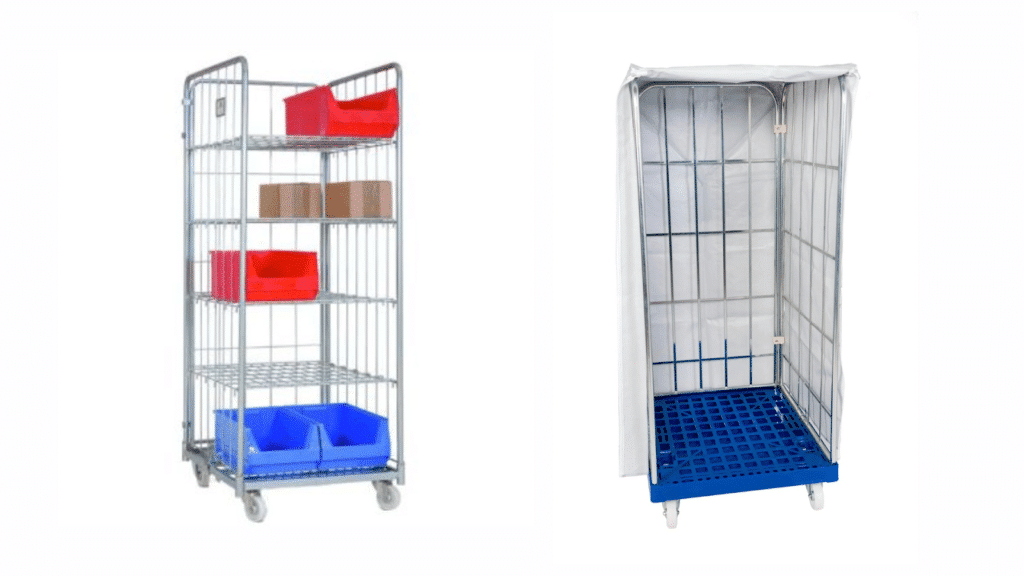
Modularité et accessoires
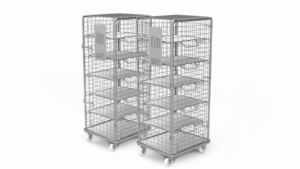
En optant pour des modèles modulaires, vous bénéficiez d’une flexibilité d’utilisation qui peut répondre à diverses exigences opérationnelles. Les étagères amovibles sont un excellent exemple de modularité. Elles permettent d’organiser et de séparer les produits en fonction de leurs caractéristiques. Elles facilitent ainsi l’accès et le tri des marchandises. Vous pouvez ajuster le nombre d’étagères en fonction de la taille et de la quantité des articles à transporter, optimisant l’espace disponible et garantissant une distribution uniforme du poids.
Les options de verrouillage sont également essentielles pour garantir la sécurité des marchandises, surtout lors de déplacements fréquents ou sur de longues distances. Des systèmes de verrouillage robustes protègent vos produits contre le vol et les pertes, tout en maintenant les articles en place pendant le transport.
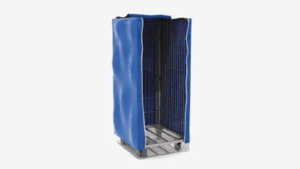
Parmi les accessoires supplémentaires, les couvertures et les protections jouent un rôle important pour préserver l’intégrité des produits transportés. Les couvertures peuvent protéger contre la poussière, l’humidité et d’autres éléments extérieurs. Tandis que les protections ajoutées, comme les coins renforcés ou les tampons de choc, peuvent prévenir les dommages en cas de collision ou de manipulation brutale.
Conformité aux normes de sécurité
Se conformer aux normes locales et internationales garantit la sécurité des travailleurs et la durabilité et la fiabilité des équipements. Les normes de sécurité régissent divers aspects, tels que la capacité de charge, la stabilité, et la résistance des matériaux. Par exemple, en France, la norme NF H 50-501 spécifie les exigences techniques et les tests de performance pour les roll conteneurs.
Il est essentiel de vérifier que le roll conteneur a passé des tests de sécurité rigoureux et obtenu les certifications appropriées. Ces tests incluent souvent des épreuves de résistance à la charge, des essais de durabilité et des évaluations de la stabilité. Utiliser des équipements conformes aux normes peut également avoir un impact positif sur les assurances de l’entreprise. Ils réduisent ainsi les risques et les coûts associés aux accidents du travail.
Les entreprises doivent s’assurer que les roll conteneurs respectent les réglementations en vigueur pour éviter des pénalités et des amendes. De plus, l’utilisation d’équipements certifiés et conformes aux normes de sécurité améliore la réputation de l’entreprise auprès des partenaires et des clients. Cela montre un engagement sérieux envers la sécurité et la qualité.
Conclusion
Le choix du roll conteneur idéal pour votre industrie dépend de plusieurs critères, notamment la capacité de charge, les matériaux de fabrication, la maniabilité, la modularité et la conformité aux normes de sécurité. En tenant compte de ces éléments, vous pouvez sélectionner un roll conteneur qui répondra parfaitement à vos besoins spécifiques. Cela améliore ainsi l’efficacité et la sécurité de vos opérations. Nous vous invitons à évaluer soigneusement chaque aspect abordé dans ce guide pour faire le meilleur choix possible.
Simplifiez votre gestion de matériel avec Rolls Rapide sur mesure. Nos rolls de manutention disponible en location et à la vente sont parfaitement adaptés pour répondre à vos besoins spécifiques. Ne tardez pas à nous contacter pour une consultation personnalisée et des solutions logistiques sur mesure.
FAQ
Quels sont les avantages des roll conteneurs en acier par rapport à ceux en plastique ?
Les roll conteneurs en acier sont plus durables et peuvent supporter des charges plus lourdes. Cependant, ils sont plus lourds et peuvent être plus coûteux que ceux en plastique. Les conteneurs en plastique sont résistants à la corrosion, plus légers et généralement moins chers, mais ils ont une durabilité légèrement inférieure.
Comment entretenir un roll conteneur pour prolonger sa durée de vie ?
Pour prolonger la durée de vie de votre roll conteneur, il est essentiel de le nettoyer régulièrement pour enlever la saleté et les débris. Vérifiez et entretenez les roues et les systèmes de freinage pour assurer une utilisation en toute sécurité. Si le conteneur est en acier, assurez-vous que la finition (peinture, revêtement par poudre, galvanisation) est en bon état pour prévenir la corrosion.
Quelle capacité de charge est recommandée pour une utilisation industrielle standard ?
Pour une utilisation industrielle standard, une capacité de charge de 600 kg est généralement recommandée. Cela offre une marge de sécurité pour transporter une variété de marchandises sans risque de surcharger le conteneur.